Q//Though we tend to believe in architecture, as in literature, than an important work should be complicated, many appealing buildings are surprisingly simple, even repetitive, in their design//
Alain de Botton, Architecture of Happiness, 2006
As a society, we have come to believe that price equates to quality.
This continues in the real estate industry. We believe that to make a good building, a lot of money must be spent. If a developer needs to minimise costs, corners must be cut and cheaper materials chosen, inevitably resulting in a worse building.
But does this need to be the case? I do not believe so. I propose that, if time is invested in thoughtful design, cheaper materials can be used and the integrity of the building maintained.
We rarely like or dislike a building due to expense alone. Expensive materials can make us feel something. An expanse of marble elicits a sense of grandeur. A portland stone facade is more impressive than a modular cladding system. But if that marble expanse is badly lit or the stone facade gets dirty quickly, the resulting place does not feel good.
The elements that stir delight within us are more subtle: the warm, contented feeling of stepping into a room flooded with afternoon sunlight or the sense of calm when stepping over the threshold in to a cathedral.
These things are not, of themselves, expensive. The window – placed at the right angle to flood a room with light is no more expensive than any other window. The expense, or rather, the investment, lies in the thoughtfulness of design.
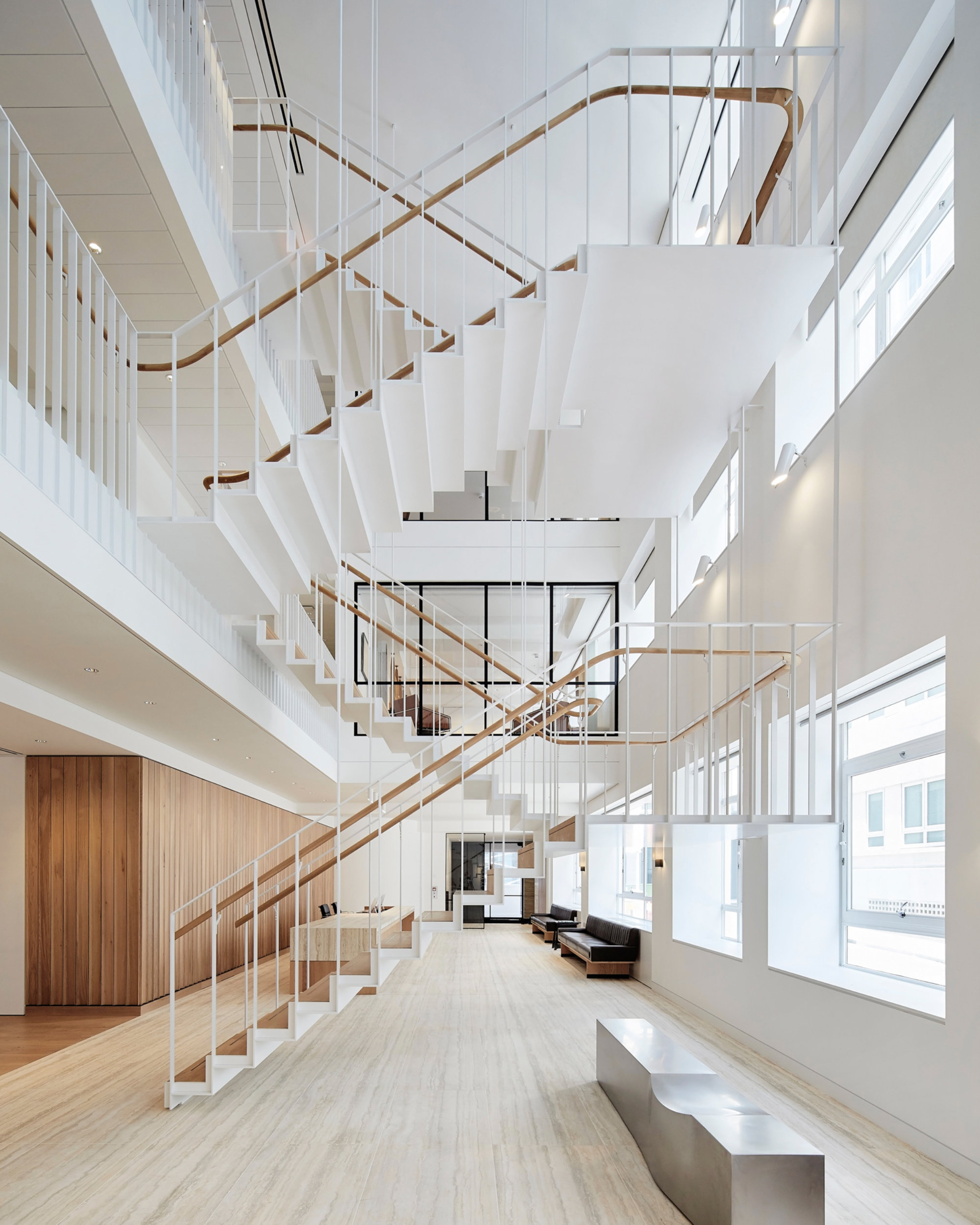
Simon Silver, co-founder of Derwent London (London’s most revered office developer) recently noted the relatively modesty in their newly redesigned headquarters at 25 Savile Row. Designed by Piercy & Co., Silver noted that the staircase is just a white painted, steel staircase. This simple staircase was cited in the judges comments when this development won a national RIBA award. The judges noted:
Q//The primary spatial move was to cut a three storey atrium in the middle of the plan, and to suspend within it the lightest of sculptural steel staircases. This has connected volumes of space across floors, with views through and across the whole building, creating a great sense of openness and lightness.//
(link)
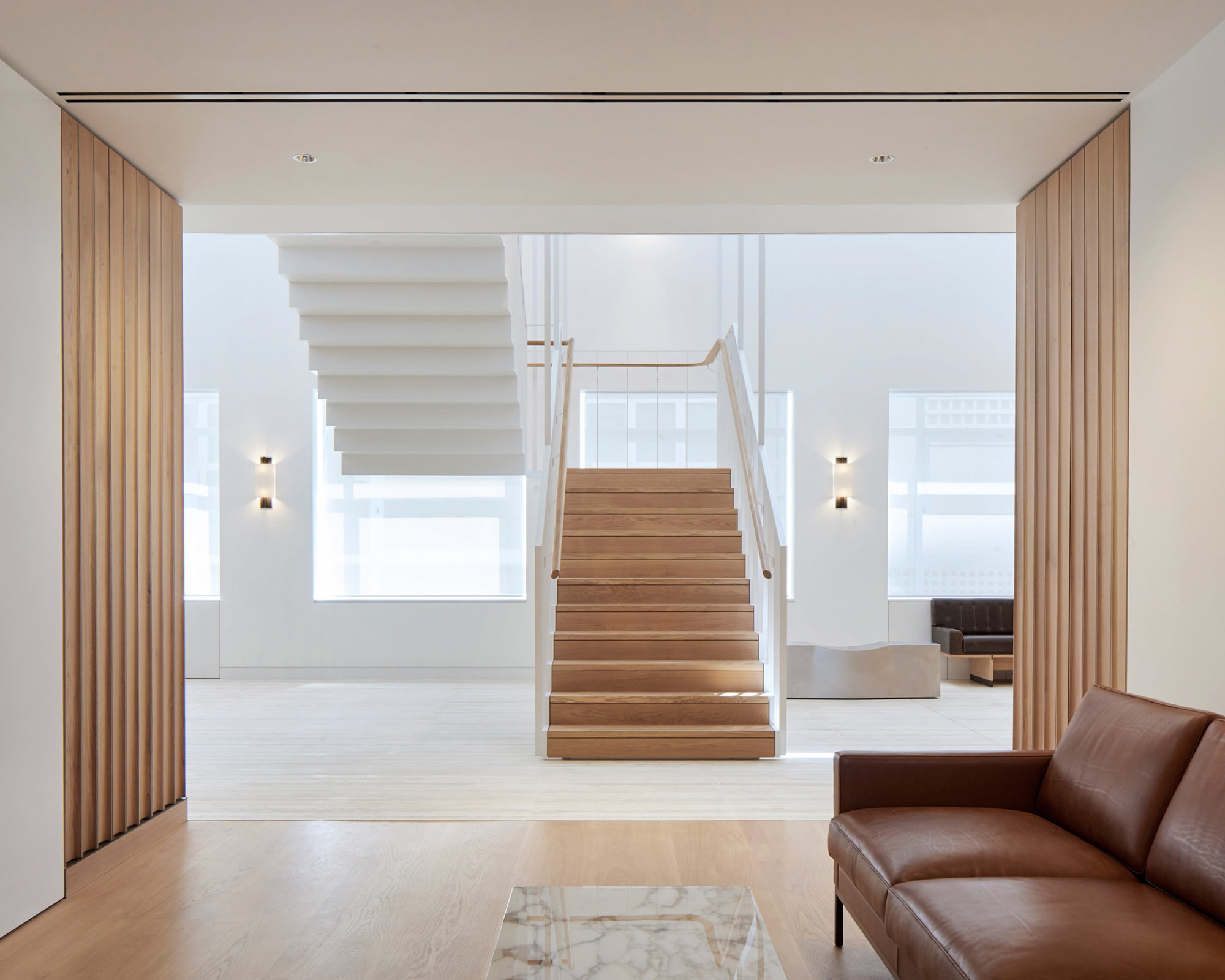
This design was not about cost or status. This was a careful consideration of the elements that really mattered for this space: light, volume, human circulation. Once these elements are established, a plan can be made to achieve them most effectively, reducing reliance on expensive materials. Derwent’s staircase is a perfect example of a design which is high in thoughtfulness but modest on cost.
Importantly, when awaiting in the reception area for a meeting, the social aspect of this staircase is evident. Derwent’s people cross paths, bump into advisers milling around on the ground floor. It provides a far more welcoming experience than travelling through an isolated lift lobby.
Of course to get good, thoughtful design, money and time has to be spent. But if you pay for this thoughtfulness upfront then design solutions do not need to be the most expensive.

 People | Spaces | Places