Authenticity is something we know we need to create when building new places. However it’s difficult to articulate what this means. Authenticity is personal and subjective and there is no definitive answer. Having said this, I feel there must be some common threads between authentic places. To work out what these threads are, I am turning to one of my favourite places in London, Club 606 to study why it feels so authentic.
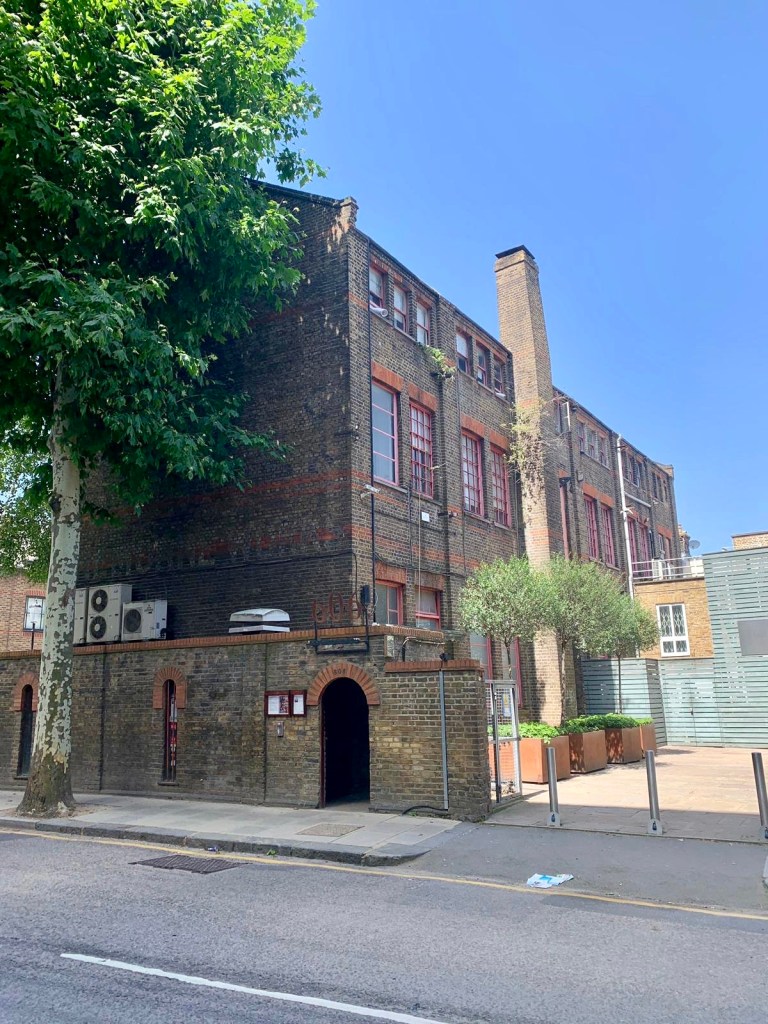
Club 606 is a jazz club on the Lots Road in Chelsea, London. To enter you press a buzzer. A black caged gate swings open and you descend via a narrow stairway. This is where the first inclination of authenticity begins. The entrance gives the faintest questionable whiff of “speakeasy” but then you realise, this is no gimmick, it is simply how you enter the club.
Having entered, you are swiftly shown to the your table. This is a well-oiled machine and they do not waste their energy on superfluous niceties. You are here to listen to the music, they know that, you (now) know that too.
This leads me to my first point of authenticity – the club has a singular focus.
A Singular Focus Produces Quality, Quality Produces Authenticity
There is a singular focus on the music and the result is music of exceptional quality. The food and wine are good but everyone is there for the music. A singular focus helps create quality and quality creates authenticity. It’s hard (arguably impossible) to produce the best food, the best music, the best wine in town but The Six sets out to be the best live jazz music venue in town and it achieves it.
It follows that if something is of high-quality it intrinsically has an element of authenticity. If care has been taken to produce something of quality it has (to at least some degree) been made just to be itself. If something is just itself then it is by definition authentic.
Flexibility Creates Resilience, Resilience Creates Authenticity
The layout at The Six is flexible and not precious. Tables will be dragged together to accommodate big groups and split apart for intimate dates. This makes it feel impermanent and, counter-intuitively, resilient and resilience makes us feel comfortable in a place. It’s the opposite feeling of being “the bull in the china shop” where one wrong turn could lead to hundreds of delicate items crashing down around you.
At Club 606 you do not feel as if you could break something or, if you did, it would not matter. As long as you don’t interrupt the music! Whatever happens in the wider world, Club 606 will still be there, adapting to the demographics, environment and still, authentically, producing the highest quality jazz. This resilience and adaptability makes it feel like it will change naturally over time, not with any passing whim and this makes it feel more authentic.
Customer Centric Places Are Authentic Places
Ultimately Club 606 feels like it is there purely to provide serious jazz aficionados (and aspiring ones…) with exceptionally high-quality music. If something is truly built for its customer can it be anything other than authentic?
As legendary marketer Seth Godin notes, “too many organisations care about numbers, what they are missing is the depth of commitment and interconnection that true fans deliver”. I really get the sense that Club 606 cares about cultivating its true fans. The Six is for people who truly love listening to great live jazz music in a relaxed atmosphere. The club is very open to new people and obviously wants to make sure that more people are encouraged to listen to and support great jazz artists but a good TripAdvisor review is less meaningful than the opinion of the regular customer, the club’s true fans.
In conclusion, Club 606 has taught me that truly authentic places have a focused purpose where they excel. They are resilient and this means being open to adaptation. Finally they focus first on satisfying their loyal customer base. It’s no mean feat to get these three things right but I feel that if you do, it’s hard for a place to feel anything other than authentic.

 People | Spaces | Places