Let Buildings be Buildings. What a nonsense sentence.
But in the commercial real estate business buildings are not buildings. They are investments bought and sold for their projected return on investment, their capital growth, their IRR. Many investors who focus on these metrics appear to have forgotten that buildings are not pure financial assets. Buildings are where we spend our days and therefore, our lives.
This divorcing of real estate into two independent interests, the financial and the physical, has historically led to a worsened physical environment. It’s not that investors don’t care about the physical environment, it’s just not the priority. Returns and the physical environment have been mutually exclusive, hence the proliferation of inane, yet profitable, retail parks and soulless office buildings.
However, following COVID-19, I am hopeful there will be a remerging, as the physical and financial become interdependent again. As we become increasingly footloose, flexible and comfortable with online shopping and experiences, we can be more picky about the spaces we choose to spend time in.
In theory, this should mean that the most valuable buildings will become those offering the best environments for people, the ones that entice us to spend our time in them.
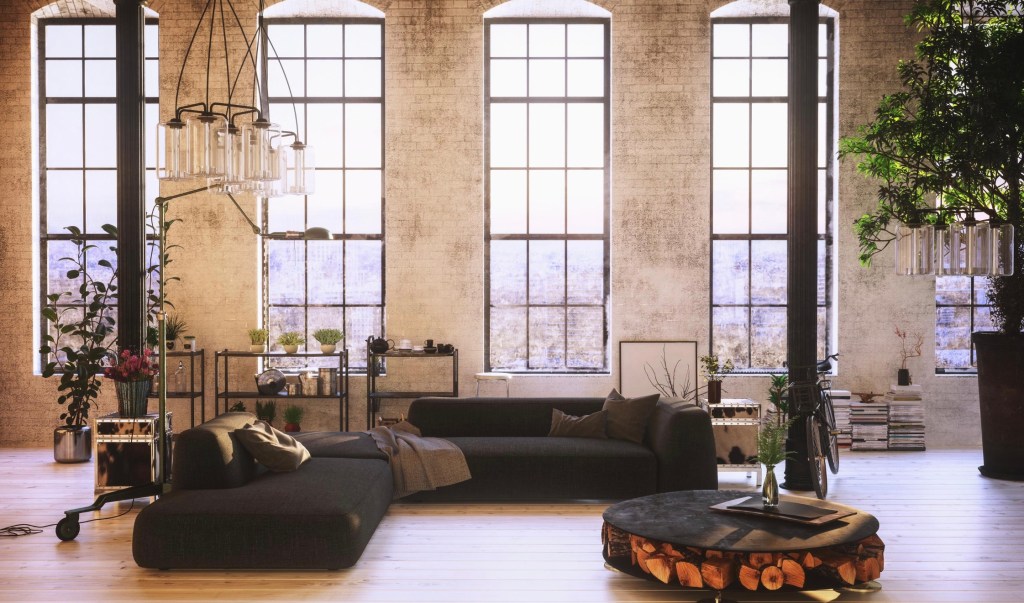
The Division of Interests: How Buildings Transformed into Financial Products
Over recent decades, commercial real estate has effectively become a financial product.
Businesses used to own commercial real estate as the by-product of their businesses. A car mechanic would own the garage it operated from, the solicitors’ firm would own their offices, a pub would own the pub.
Nowadays most businesses rent their premises, freeing up capital to spend on their core business. This has created an opportunity for investors to buy buildings for their rental income.
This is where the owner and the occupier have become disconnected. And is, I believe, one of the key reasons for the proliferation of poorly designed and built buildings. As Dror Poleg says:
“Commercial real estate is a servant of two master: the people who live and work within its buildings and the financial investors who own its equity or debt”
Dror Poleg, Rethinking Real Estate, 2020, p.5
And over recent decades, the financial investor has been the dominant master.
The Result: A Proliferation of Poor-Quality Buildings
When profit is the primary motivator it is not logical to spend more than the minimum required to lease a building. It is often difficult to prove that making a building nicer for the people who spend time in it will translate to a higher rent, so the logical choice is to spend the smallest amount required.
There is another complex layer to this. Despite the common perception of the “evil, faceless Landlord”, much commercial property, believe it or not, is owned by you and I.
Recent research by the Radius Data Exchange showed that 65% of all UK retail property (such as high streets and shopping centres) is owned by institutions (such as pension funds), charities and the public sector (link).
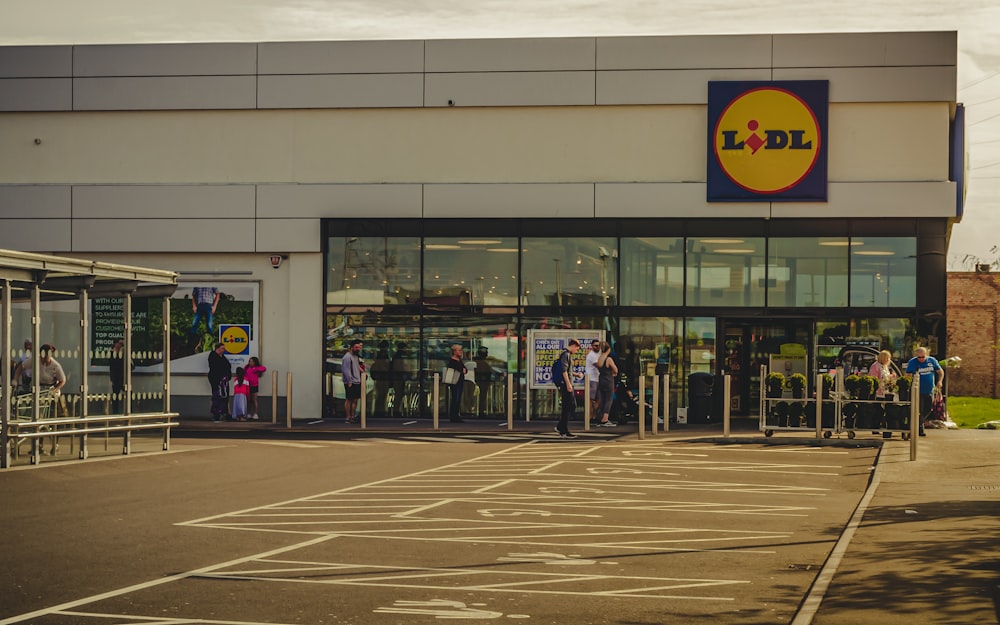
If you hold a pension in the UK, it is likely that a portion of your pension is invested in real estate. Therefore, the cheaply-built or poorly-managed retail park, home to Lidl or TK Maxx may have been built that way to maximise the annual returns required by the pension holders aka our parents, grandparents and future selves.
This does not exonerate investors from creating poor quality buildings, but it helps explain why often new buildings do not appear to be of the same quality as those built 100 years ago.
Booming Demand: Exacerbates the Division
This divorcing of the physical asset from the financial asset, has been exacerbated in recent decades as more investors put their money into real estate. In 2019 JLL stated:
“$1.5 trillion of new capital is set to target global real estate over the coming years”
JLL, 2019 (link)
The increased interest in the sector is due to a variety of reasons which include a higher annual return on real estate than other assets, particularly in our current low interest rate environment.
For example, an investor looking for secure, long-term government income, could take out a 20-year bond, currently yielding 0.50%. Alternatively, they could buy an office building let to the government yielding almost 4.00% as LGIM did earlier in 2020 (link). In this case, the building and the bond are effectively the same product – 20 years of reliable government income. An investor buying a building with the government as the tenant can feel confident it will pay its rent in full and on time, just as it would pay the interest due on a bond.
This is the perfect example of how the physical element becomes an after-thought when buildings are being analysed as a financial investment. It’s not that investors are not interested in the built environment it just is not a necessary consideration for their purposes.
Is the Cycle Ending?
The above shows a vicious cycle:
Real estate becomes an asset class > Investors are attracted by the high yields > More money pours into the industry > More money = higher returns > Higher returns attract more investors focussing on financial returns, not the built environment >>
There is now a great possibility that this cycle is ending.
As occupiers have a greater range of choices of where they can work, the office needs to be a very compelling place to get people to come to it. As Jonathan Emery (ex-MD of Lendlease in the UK & Australia) recently stated:
“The thing that will define a successful office building is if it draws people to it”
Jonathan Emery, July 2020
Or as Pi Labs (a real estate VC firm) has predicted:
“Office buildings will no longer be primarily assessed on the quantity of usable desk space, but instead will be judged by how successfully they enable workplace focus, collaboration, learning, and organisational culture.”
Pi Labs 2020 link
Investors will no longer be able to rely on well-funded companies taking long leases, creating assets with a reliable, secure income stream.
Instead, to secure a good income stream, we will have to create buildings that are enticing to occupiers, that create positive, happy environments for people to spend their time. Otherwise they will just work from home or shop online or order takeaway or do an online workout and the commercial buildings themselves will not create any income at all, becoming valueless liabilities.
Some real estate investors are concerned by this but really it creates an exciting opportunity. Investors will no longer have to choose between serving the “two masters” because, by creating wonderful places for people, they will be creating the best returns.

 People | Spaces | Places
Great explainer Hattie. Sometimes the simple truths need saying, calmly and clearly. Very interesting read.