Back in March I wrote an off-hand response on LinkedIn to Oliver Shah (business editor of the Sunday Times), when he asked in a React News article “where have all the big characters gone?”.
They haven’t gone anywhere.
There are more Big Characters in the property industry than ever, each doing extraordinary things.
However, they look and behave differently to the big characters of days gone by. And whilst Shah laments this, I celebrate it.
The Power of the Internet…
To my consternation Shah responded to my LinkedIn post asking why I disagreed with him so strongly.
Oh dear.
It’s good to be reminded there may be a real person at the end of an off-hand comment posted on the internet.
So here is my response to Oliver Shah.
Really it is a THANK YOU to today’s Big Characters for setting a new example.
Thank you for showing us that there are thoughtful people, thinking in new ways to create better places for people.
Thank you for proving to the industry and to tomorrow’s leaders that we are not condemned to the patterns of the past.
The Big Characters of Today Don’t Look Like Those of the Past
Ultimately, Oliver Shah was right.
The Big Property Characters of today do not look like the ones of days gone by.
Thank Goodness!
Since Day One of my career in real estate, I looked up to the most revered leaders and asked myself:
“Do I fit this mould?”
I did not.
The natural next question was:
“Can I succeed or even just survive in this industry if I don’t fit this mould?”
A decade ago, when I started in the industry, the answer was a resounding “no”.
This feeling was confirmed in Shah’s article which included a photograph of one of the “flamboyant” CEO’s of the past dressed up as Kiss on a stage, encircled by 6 women dressed in corsets & suspenders.
That’s not something I can aspire to replicate.
Luckily a lot has changed over the last decade.
The New, True Entrepreneurs
Shah mentions that he started reporting on property in 2010 “at the end of the great entrepreneurial period”.
This confused me.
In my experience we are living through one of the greatest periods of entrepreneurialism in the real estate industry.
The old model of chucking up a 20-storey office building, letting it and forgetting it for 10 years does not cut the mustard anymore.
I appreciate that many of the previous Big Characters, the “leverage merchants”, put together clever, risky land deals. But this has been conflated with being an “entrepreneur”. There is a fine line between entrepreneurialism and impudent risk-taking. It was the attitude of the latter contributed to the financial crisis.
Shah makes the valid point that the increase in institutional money in real estate has made it more difficult for those of an entrepreneurial bent to buy “beginner assets”.
However, true entrepreneurs find ways of creating value without needing that starter asset.
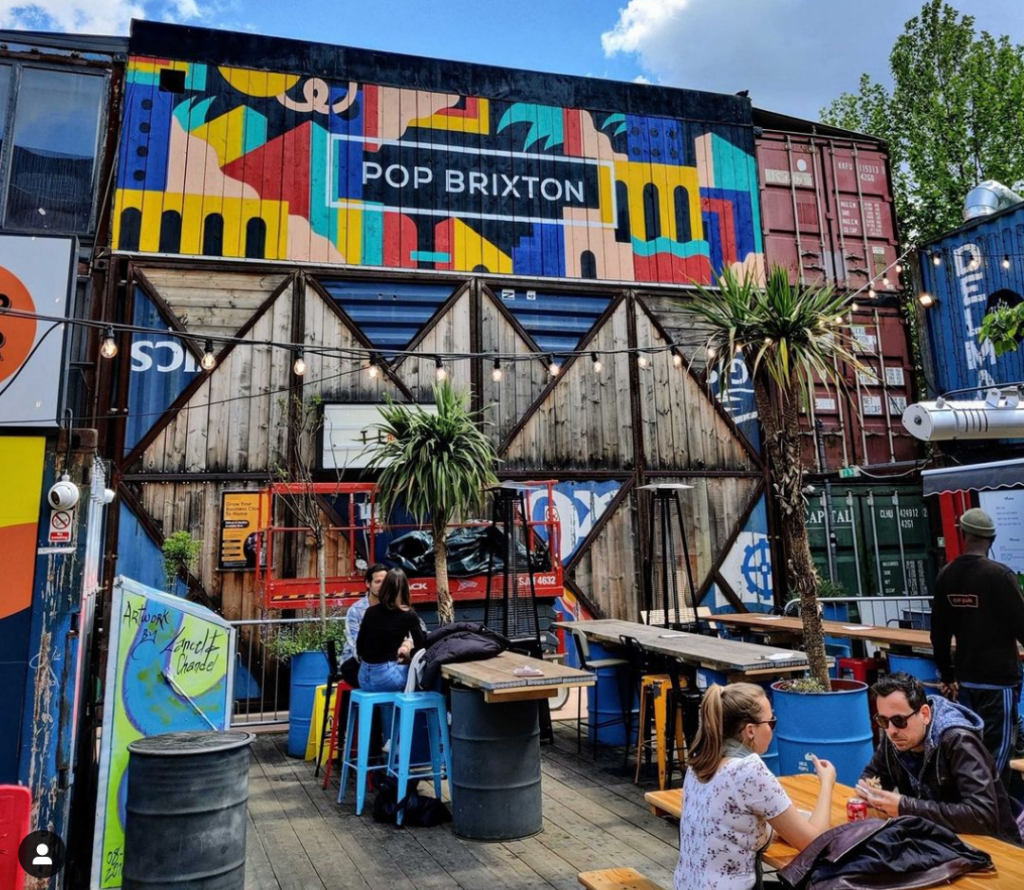
Take BOXPARK and Pop Brixton (by Makeshift) as examples. These two businesses have taken underused land and created temporary space for retailers, restaurants, bars, workspaces and studios using shipping containers.
They have generated social and financial value from land disregarded as worthless by the majority.
Now that these businesses have been around for a while, they seem like such an obvious solution. But that is the key to great entrepreneurship – seeing the ‘obvious’ answer before anyone else.
[Enter Stage Left] ~Proptech~
Many of today’s great entrepreneurial minds in the industry have turned to proptech to create & change our world.
There are over 8,000 proptech companies alone on Unissu (link), a market-place connecting proptech companies to their customers.
Each of these is led by forward-thinking people who have entrepreneurialism, courage and “boldness” by the bucket-full.
Take Brittany Harris & Jade Cohen, co-founders of Qualis Flow (link). They are developing AI & machine learning technology to automate the (currently very manual) process of tracking materials coming to and from construction sites. Their technology reduces mistakes in deliveries, increasing efficiency and profitability. The tech also accurately shows the site’s environmental impact making it easier & cheaper for businesses to track & improve their sustainability.
Here are two entrepreneurs creating cutting-edge technology to disrupt processes that have been the same for 50+ years. In doing this they are creating true financial & social value. That deserves the Big Character title.
The Changing Nature of Notoriety
One of the reasons the Big Characters of today are different is that the nature of notoriety has changed.
Historically there were only so many inches of the Estates Gazette or Property Week, meaning there was only space for a number of Big Characters. The people making the most noise would be reported and then opportunity (and funding) would follow.
The decentralisation of the media has made it possible for individuals to create a niche and then be a Big Character to those within their niche. I also believe this is supported by the amount of money flowing into the sector, not hindered (as Shah suggests).
There is enough capital for smaller entrepreneurs to raise funding for a business which will serve a very specific group. In the coworking space this is demonstrated by Brixton Castle (link), who cater for thinkers & creators in South London or Homework (link) who were inspired by the needs of working parents in South West London.
To the people who use these spaces, the founders are the Big Characters. They are the people fundamentally changing the built environment where their local community spend their time. They may not have a feature in Property Week but they have a highly engaged community who look up to them.
The Changing Nature of Big Characters
And finally, the type of people we respect and look up to has changed so much. Because the characters no longer need to grab the attention of the media in the same way, it leaves room for more thoughtful people, who are (in my opinion…) more worth listening to.
Take Faisal Butt, founder of Pi Labs (link). Butt has raised, and is investing, over £100m into new tech businesses changing the shape of the built environment. Butt has to convince investors that it’s worth putting their money into an emerging sector with only a few proven exits (so far). That is bold, Big Character behaviour. However, rather than feeling the need to be flamboyant and crass, Butt is quiet, thoughtful. When he does speak, people listen.
One of my favourite CEOs of a proptech business (link) recently described his team as a group of “quiet superheroes”.
Now that’s something I can aspire to.

 People | Spaces | Places